

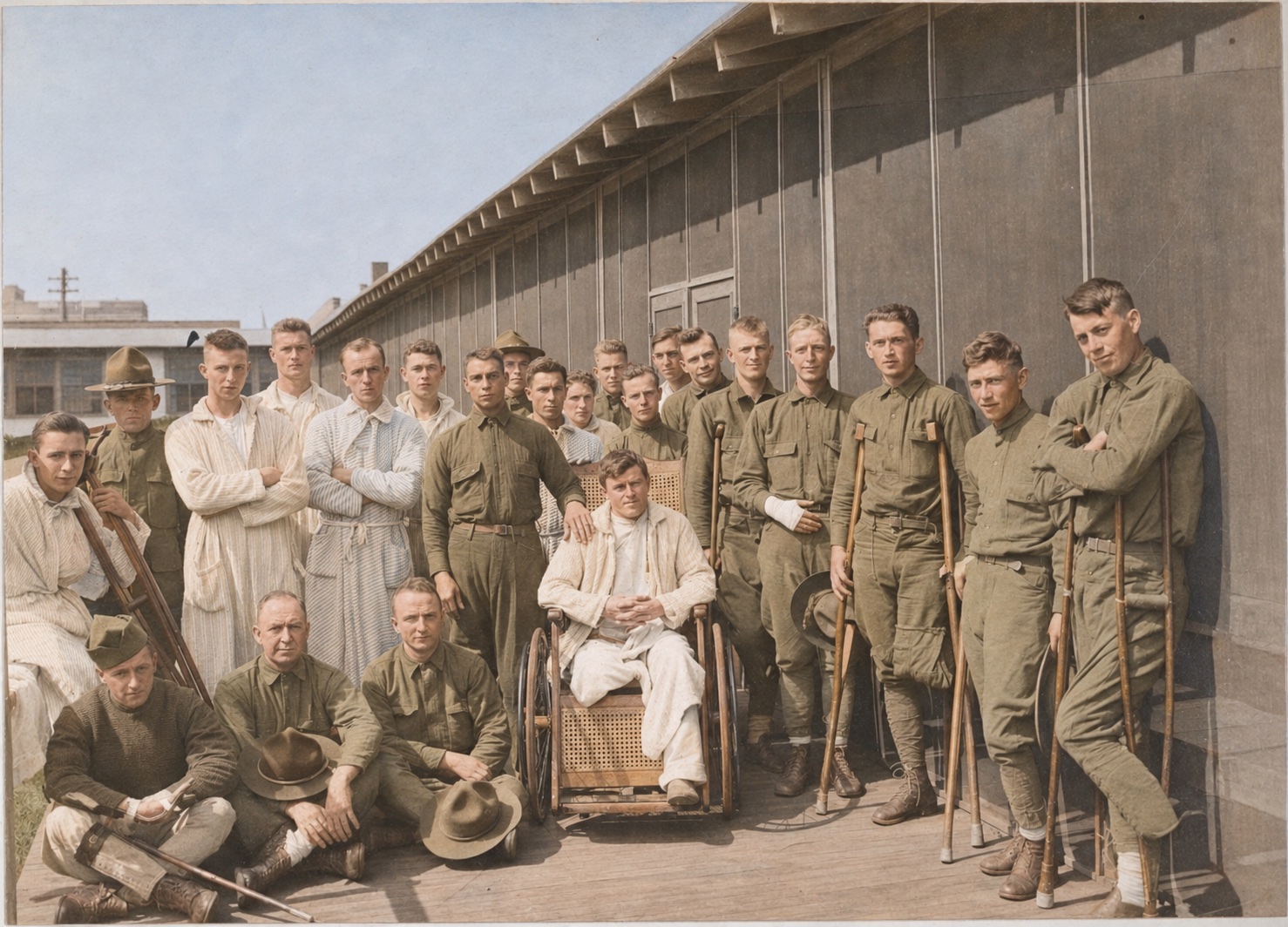
In December 1918, work began on a library at Fort McHenry’s Army hospital. One wounded man watched the work and asked if he could help, the hospital’s official history recalled, “though he had but a left hand to offer.”
He was a trained businessman, and the Army account says he spent months working as an adviser and assistant in the library. I love that detail: the man watching the work became one of the people doing it.
The fort became U.S. General Hospital No. 2 in 1917. During World War I, its patients received treatment and vocational training. Here’s a very different Fort McHenry from the one in the national anthem story.
You can also explore these photographs in color at the end of the story, with the original photographs kept below for comparison.
Hospital wards around the star fort
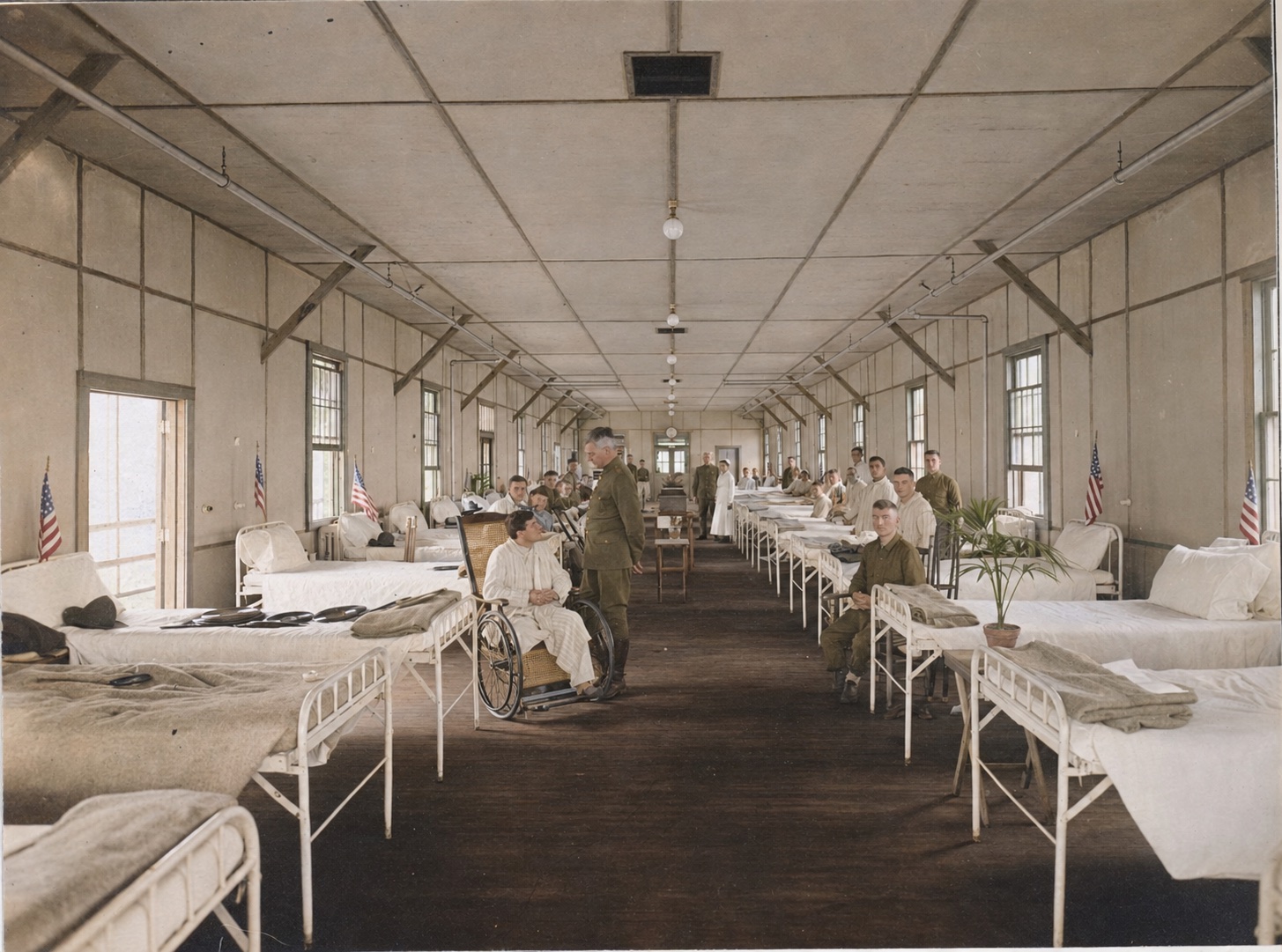
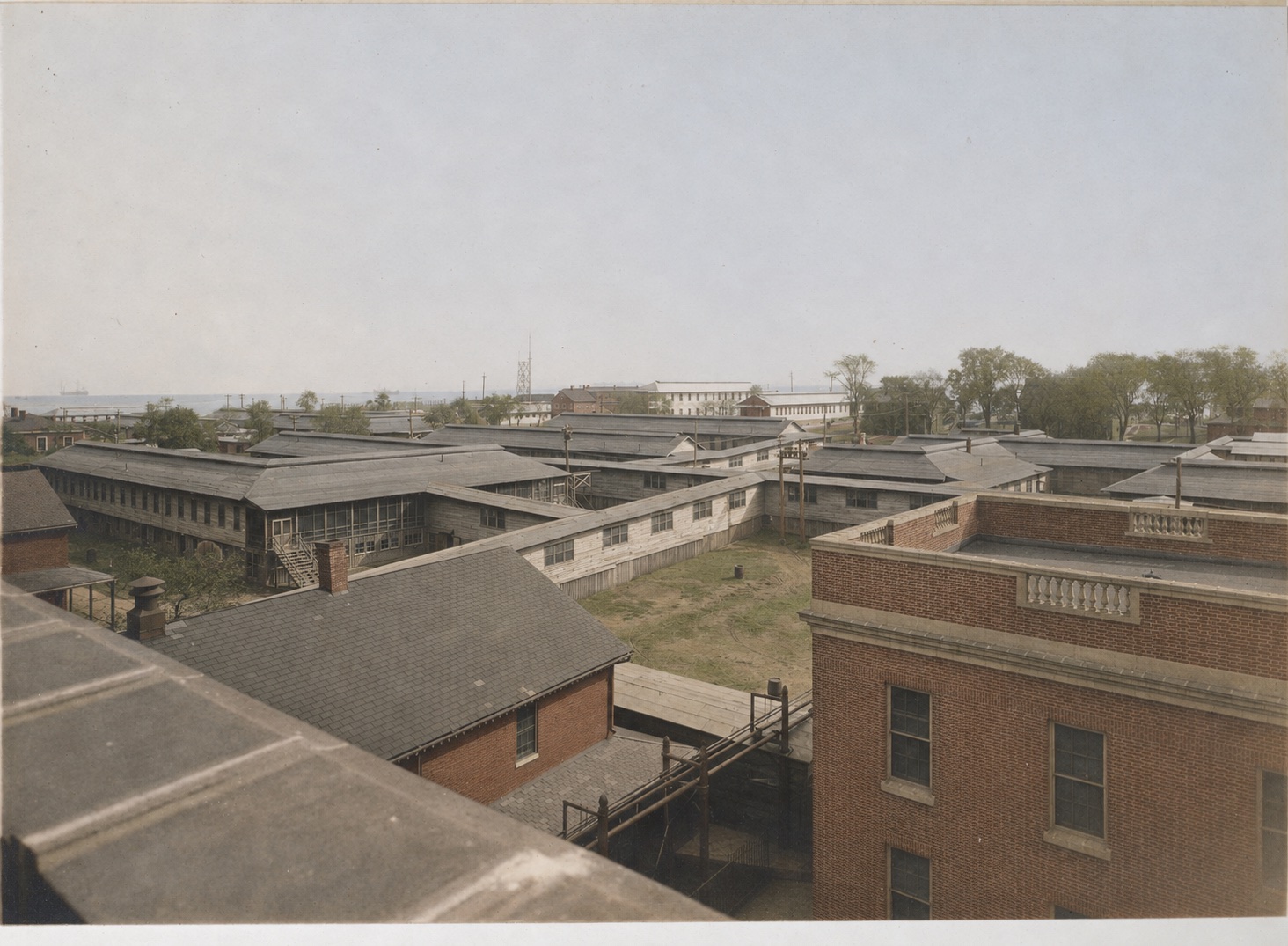
The Army began with buildings that had fallen into disrepair, using old brick barracks and other original structures while new hospital buildings went up. Wards and other buildings filled the grounds around the star fort.


Look at those covered connections between the wards. The original caption on this National Archives photograph makes a pretty striking claim:
One may traverse the four miles of wards without going up a step or going out of doors.
The Army’s hospital history describes treatment that included facial reconstruction and the repair of damaged nerves, bones and joints. Doctors and aides measured joint movement and strength and charted patients’ progress.

Patients became teachers
An early patient who was an electrician and expert telegrapher started a Morse telegraphy class, according to the Army account. The class met in former Army quarters, while other patients studied Morse telegraphy in the wards.
The class even operated the post’s local telegraph office in the hospital’s early days. How’s that for a practical assignment?
Other workshops supplied things the hospital needed: the woodworking shop made tables and hat racks for the wards, and the automobile shop repaired ambulances. The Army account says the shoe shop also handled all the hospital’s shoe repairs.
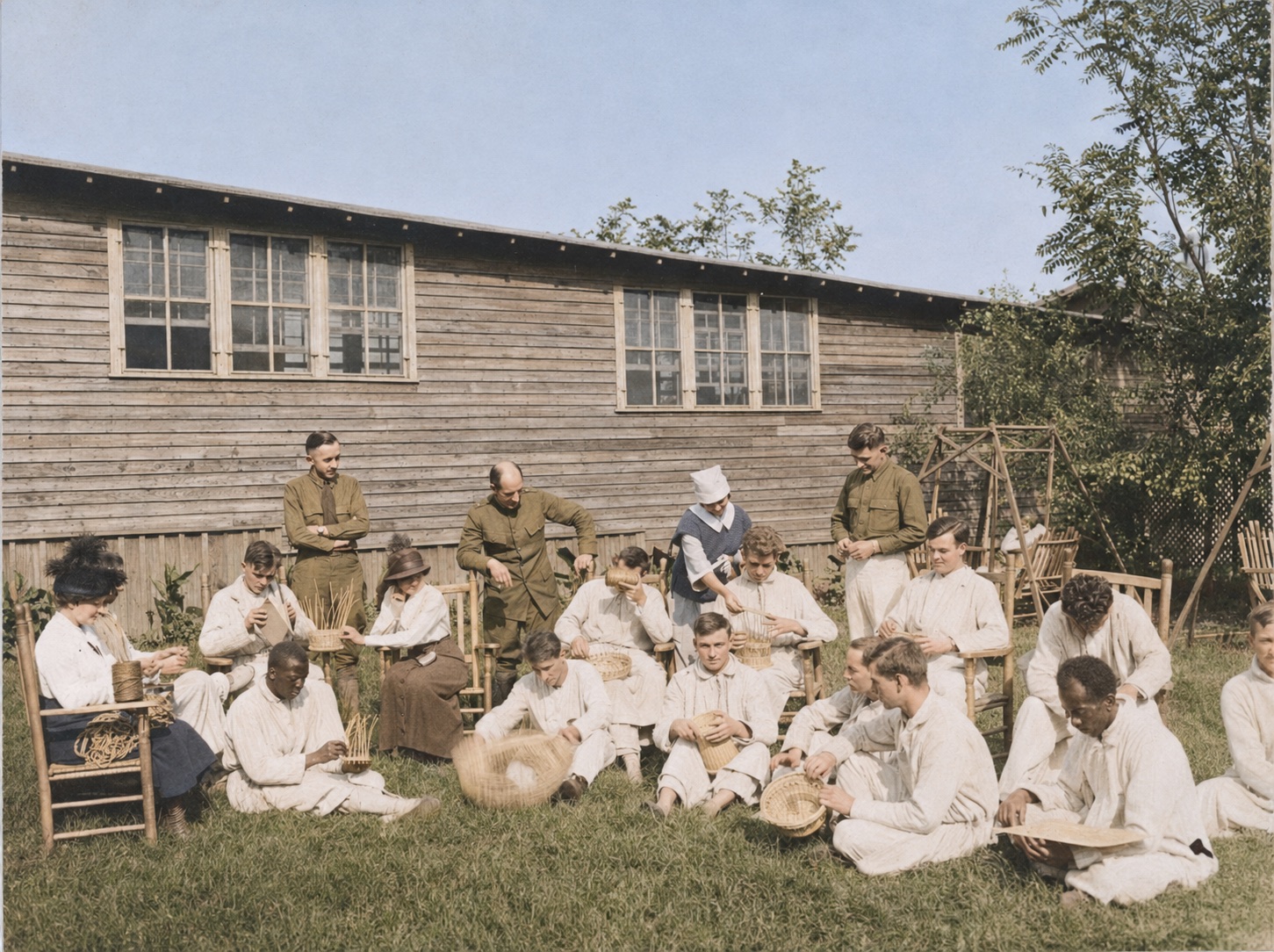
The educational department provided recreation, occupation and instruction according to each patient’s needs. Fort McHenry and Walter Reed in Washington were among the hospitals providing rehabilitation for disabled soldiers early in 1918.

Basket-making pupils could become instructors themselves. Blind patients received instruction in typewriting, craft work and Braille, while deaf men and men with speech impairments received special instruction, including lip reading.
The print shop produced material needed to operate the hospital and printed its newspaper, the Trouble Buster. That’s a pretty good name for a hospital paper.
The hospital grounds became a park
The hospital occupied the fort at the eastern tip of Locust Point. You can compare the wards with the photo in our earlier post about a sailboat off Fort McHenry.
Treatment and training continued after the 1918 armistice. The fort’s National Register documentation places its hospital period between 1917 and 1923; Congress designated it a national park in 1925.
The same preservation account says demolition of the World War I hospital buildings was completed around 1929.
Fort McHenry in color
These four photographs have been colorized with AI. Colors and fine details are interpretive, rather than a record of how the scenes looked. The original photographs remain above.
Original photographs: National Archives. Patient group by W. L. Mann; ward interior credited to C.P.I., Washington, D.C.; grounds and basket-making photographs supplied by the Committee on Public Information.
Lost Baltimore stories, in your inbox.
The newest story, plus a few from the archive.
Free. Unsubscribe anytime.
AI was used for writing and to colorize the featured photograph and four photographs in the footer gallery. Colors and fine details are interpretive. All four original photographs are retained in the article. Here’s how we use AI.Suggest a correction