
1910s
New streetcar tracks, city maps and views from Emerson Tower show different sides of Baltimore in the 1910s.
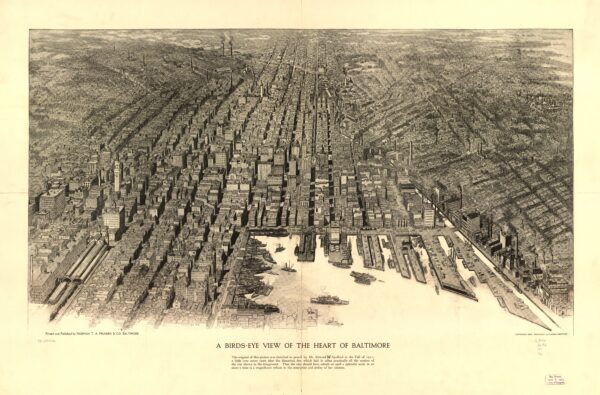
Seven years after the fire, Baltimore’s skyline concealed repaired skyscrapers, an interrupted Custom House and a reshaped waterfront.
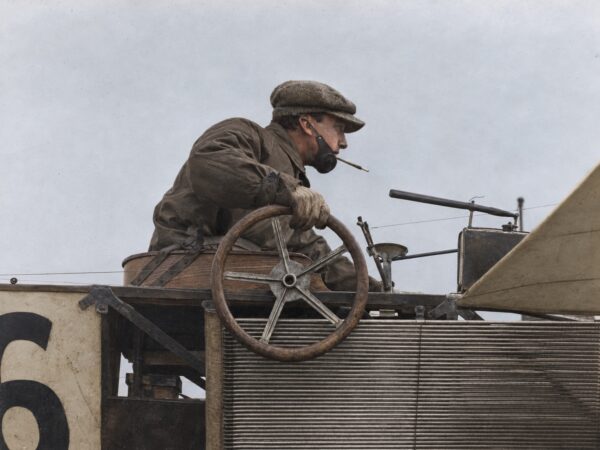
The whistles blew, the City Hall bell tolled, and a sick man on St. Paul Street paid $500 just to see Hubert Latham’s monoplane circle past his window.

Lewis Hine’s caption says Bessie, 4, and Marietta, 7, shucked oysters in a Biloxi cannery in 1911. In 1900, their family lived on North Front Street in Baltimore.
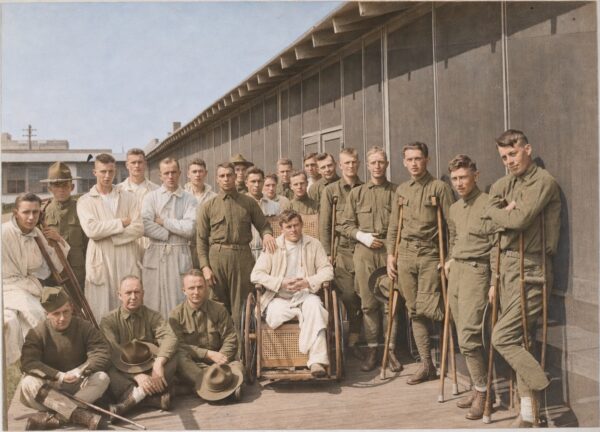
A wounded man watched Fort McHenry’s new library taking shape, then offered to help, though he had only his left hand to offer.

Track work filled Howard and Saratoga in June 1914. That spring, United Railways announced plans to put concrete beneath its track ties while keeping streetcars running.
Lost Baltimore stories, in your inbox.
The newest story, plus a few from the archive.

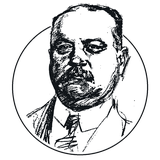
Tom McNulty, the campaign singer in our logo, challenged a zero-vote return in 1911 and became Baltimore’s sheriff two years later.

The rowhouse where Babe Ruth was born, the school where he learned the game, his 1914 Orioles contract and the 1918 fight outside the family saloon that ended in his father’s death.
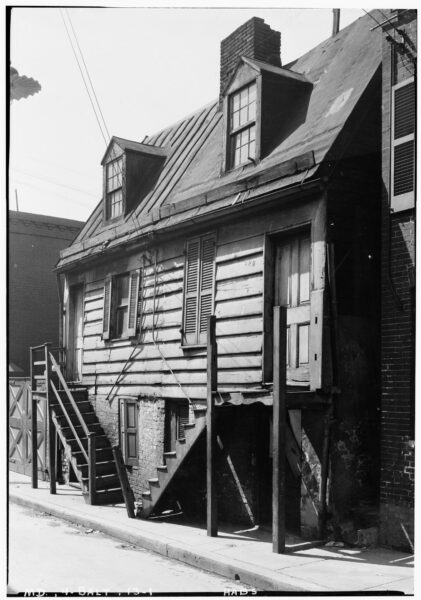
By the Sun’s 1919 account, at least a half-dozen families moved into a house on Aliceanna Street and moved right back out, and the neighbors blamed a ghost.

A 1914 postcard shows Baltimore and Liberty streets when the intersection was known as McLane Place.

In 1911, Henry B. Gilpin climbed a giant medicine bottle above Baltimore. A later panorama shows the city spread out below.
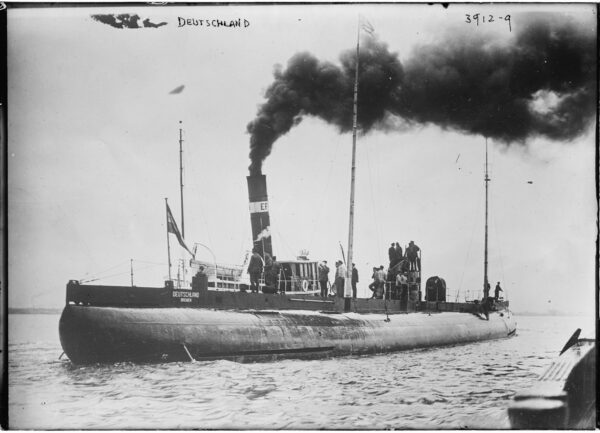
In July 1916, a German cargo submarine called the Deutschland crossed the Atlantic and tied up at a pier in Locust Point, hidden behind barges and barbed wire. Thousands of Baltimoreans came to look anyway.

Film shows Theodore Roosevelt in Baltimore for the fourth Liberty Loan campaign on September 28, 1918.
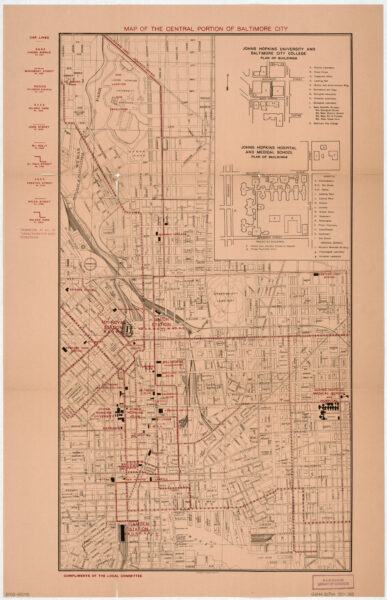
A map of central Baltimore shows streetcar lines and includes insets for Johns Hopkins University and Johns Hopkins Hospital.

An old photograph shows bananas being inspected in Baltimore around 1910.
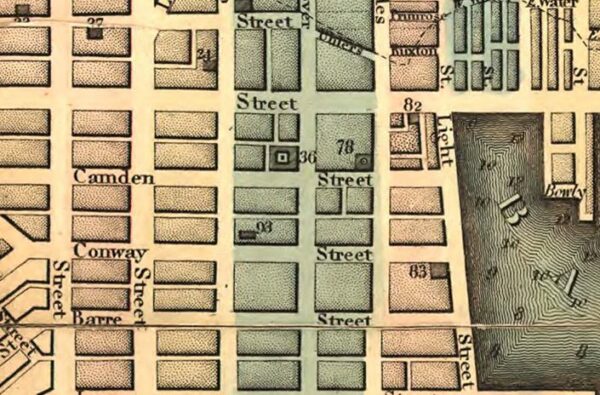
A 1914 Baltimore Sun article traces street names to royal figures, landowners and the towns that became Baltimore.

A view across Baltimore’s rooftops from Emerson Tower, around 1912.

A Harris & Ewing photograph records graduation exercises at the U.S. Naval Academy in Annapolis in 1917.

A photograph shows the 1916 Elks parade on Baltimore Street, viewed from Holliday Street.
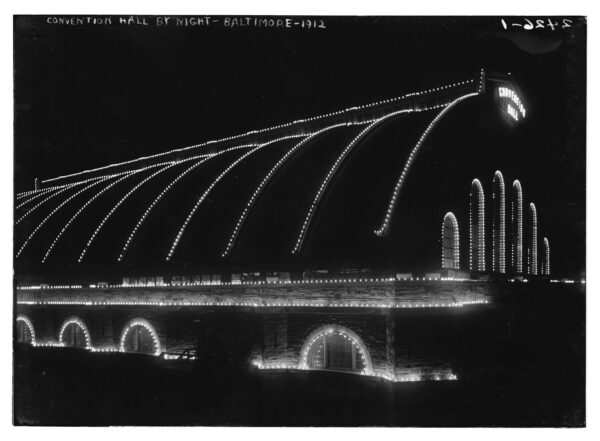
A nighttime photograph shows Baltimore’s Fifth Regiment Armory in 1912, the year it hosted the Democratic National Convention.

The American Radiator Company placed this advertisement in the Baltimore Sun on September 11, 1913.