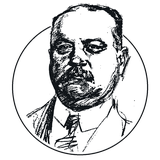


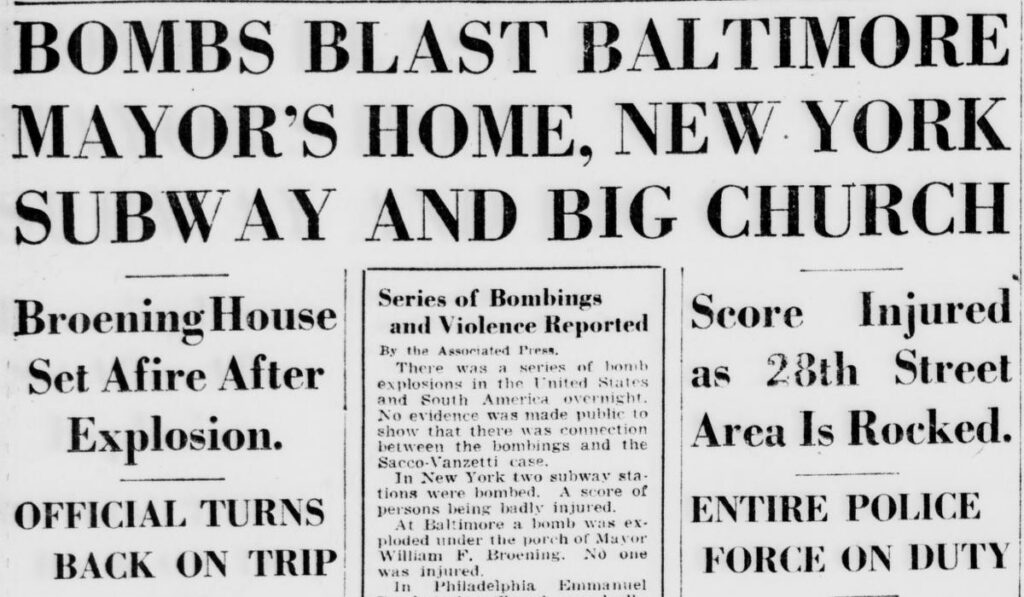
At about 6 a.m. on Saturday, August 6, 1927, a bomb went off at the back of Mayor William F. Broening’s house at 3600 Fairview Avenue in Forest Park. It wrecked the rear of the house, started a fire and jolted the mayor’s sleeping wife and two children, who all got out unhurt. No one was ever charged.
That summer, police and the papers floated three theories: Sacco and Vanzetti sympathizers, someone with a grudge against City Hall, or an angry pushcart vendor. The last was a version of the grudge theory, and none of them led to an arrest. Nearly eleven years later, the Baltimore Sun wrote that “the mystery of the explosion was never solved.”
A long night on Fairview Avenue
The mayor wasn’t home. He was on a westbound train, headed to a Knights of Pythias committee meeting in St. Louis and then on to Fort Worth. At home were his wife, Marie, their daughter, Ethel, and their son, William F. Broening Jr., who was 21.
Around 2 a.m. a neighborhood dog started making a racket outside. The son heard a noise that, he said later, sounded like someone scraping something, and he called the police. According to the Evening Sun, two patrolmen walked around the house with him and found nothing suspicious.
The family was still uneasy. The Associated Press said they stayed awake, frightened, until about daylight, and the Sun reported that Mrs. Broening got up again around 4 o’clock.
At 6 the blast hit at the back of the house, almost directly below the son’s bedroom. He told reporters it threw him into the air and dropped him back on the bed.
He ran to the front of the house and met his mother and sister in the hallway. They’d been tossed from their beds too.
With smoke curling up through the house, the three of them got out to the front lawn. A neighbor took them in while firemen put out the fire on the back porch.
Police Commissioner Charles D. Gaither later said the milkman had left bottles on the Broenings’ back porch about ten minutes before the explosion. That porch was blown to pieces. In Gaither’s view, the fuse was already burning while the milkman stood there.
“I never saw more of a wreck”
According to the Sun, the basement under the kitchen was completely wrecked and the brick foundation of the kitchen was blown out into the yard. A big piece of fresh stucco on the back wall, the Sun said, was sliced away “as if by a huge knife.” Wrapping paper from the basement ended up in the trees behind the house.
Charles H. Osborne, head of the city’s Bureau of Buildings, inspected the house that morning and told Mrs. Broening it was still structurally safe. He also told the Sun this:
“While the chief damage was to the kitchen, every window in the house was smashed, and I do not think I ever saw more of a wreck in this respect. I can illustrate the force of the explosion by saying that the glass from the window in the rear of the dining room was blown across the room and was imbedded in the plaster to a depth of several inches.”
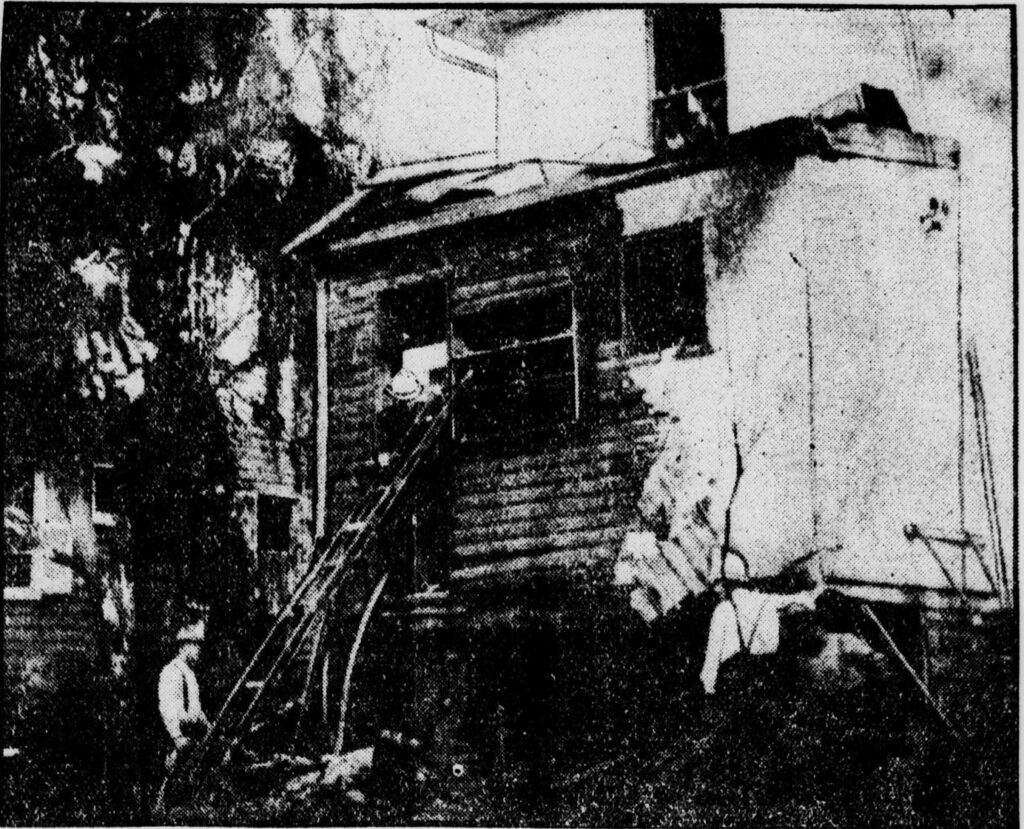
Windows broke in houses for blocks around, and pictures fell off walls. Thirteen other homes were damaged badly enough that the Northwestern district’s police lieutenant filed a report on them. Chief Inspector George G. Henry heard the explosion at his own house on West Fayette Street, at least two miles away.
The mayor heads home
Broening got the news from a telegram from his wife when his train reached Winton Place, on the edge of Cincinnati. According to the Associated Press, it said: “No one injured, but come home at once.”
He was in the Pullman washroom, half shaved and without a shirt. He grabbed his bags and hopped onto an eastbound train in his slippers.
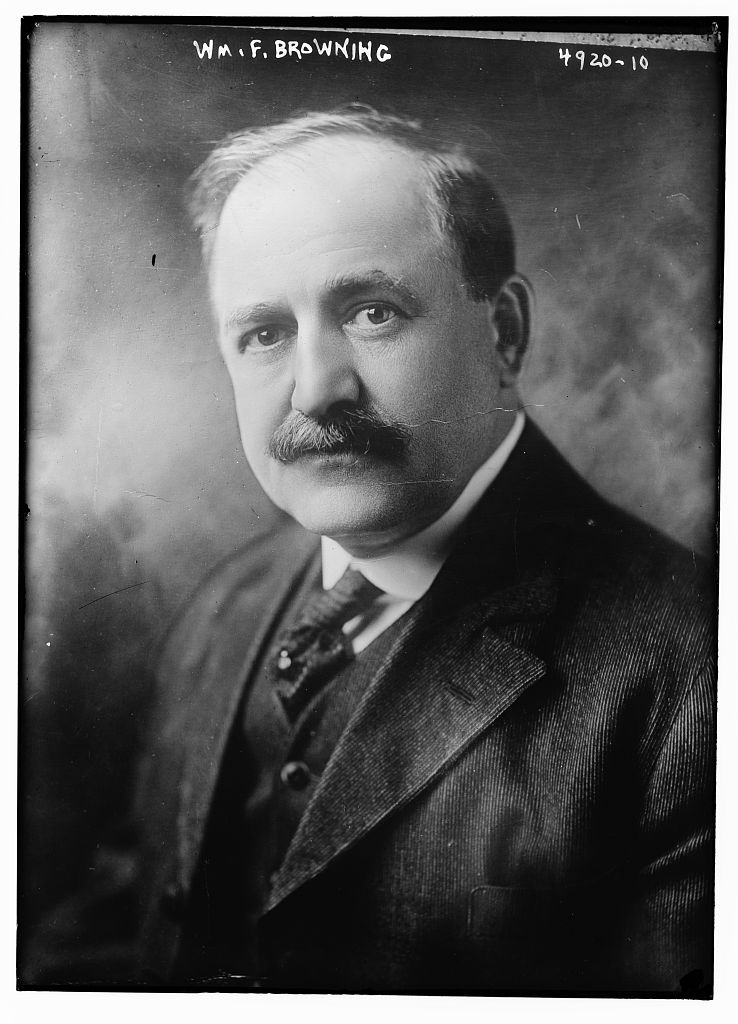
Broening, a Republican, was in his second term as mayor. He had first served from 1919 to 1923 and lost to Howard W. Jackson in 1923.
He won the office back in 1927, about three months before the bombing. The AP said politicians called him “Billy the Mixer” for his popularity with all classes of people.
He told the AP he had no idea why anyone would bomb his house. He had won comfortably, he said, in a campaign that wasn’t bitter, and he had no personal enemies who would do such a thing. He would start an investigation as soon as he got home.
That night his party left the train at Cumberland and finished the trip by car. Waiting for him there was his secretary, Theodore R. McKeldin, who would one day be governor of Maryland. Broening told the Sun’s man in Cumberland that he’d had a restless night before the news came: “I dreamed all night long of bombings.”
Bomb or gas?
That first weekend, nobody official would say for sure that it was a bomb. Police were weighing whether fumes from the electric icebox had caught fire and touched off the blast. The Consolidated Gas and Electric Company’s vice president said the ice machine couldn’t explode where it sat and could never have done that kind of damage.
Daniel W. Barnes, the dynamite inspector in the Bureau of Highways, went out on his own on Sunday and spent three hours in the wreckage. About ten feet from where he thought the bomb sat, he found a metal hinge driven an inch and a half into a tree trunk, across the grain. He told the Sun:
“The damage done by the blast and the sound it made could not have been caused by the explosion of gas. Nothing could have caused such havoc but dynamite or a similar high explosive.”
On August 10, after a U.S. Bureau of Mines expert had gone over the debris with him, Gaither gave reporters his conclusion. He didn’t think whoever did it was trying to flatten the house:
“There is no doubt in our minds that the Mayor’s home was bombed. The charge undoubtedly was placed about a foot or so from the foundation of the kitchen, and because of this we think that the person or persons who set it off did not intend to destroy the home, but to damage it and to terrify the family.”
Three theories, no arrests
The first theory came from the national news. The same night, bombs had wrecked two New York subway stations and damaged a church in Philadelphia. Nicola Sacco and Bartolomeo Vanzetti were days away from execution in Massachusetts.
Reports on what the police thought that first morning didn’t agree. The Evening Sun quoted Chief Inspector Henry as saying that Sacco and Vanzetti feeling was “more than likely” responsible. The Associated Press said he refused to give any opinion on a motive.
Detective Captain Charles H. Burns was blunter in the Evening Sun. “I don’t know what Maryland had to do with Massachusetts, but it’s pretty certain that this explosion was perpetrated by Sacco-Vanzetti sympathizers.” Either way, we found no report of evidence for it.
Meanwhile guards went up at City Hall, the Courthouse, the War Memorial, the post office and the Custom House. In Annapolis they went up at the State House and Gov. Albert C. Ritchie’s mansion. Federal judges Morris A. Soper and William C. Coleman, who had reportedly been threatened, got police guards at their homes too.
The second theory was a grudge, and the Sun reported on August 13 that police headquarters was split. Some blamed someone who held a grudge against the city government, and others still blamed Sacco-Vanzetti sympathizers. Detectives had questioned nearly a hundred of the mayor’s neighbors, and none had seen anyone suspicious.
The pushcart theory was a version of that grudge. On August 1, five days before the bombing, pushcarts were barred from downtown streets. The Sun called it an order of the Board of Estimates, and the Evening Star called it an ordinance passed by the previous administration.
Either way, Broening had turned down the vendors’ request to park their carts on the sidewalks instead. The Sun said exceptions might be made where merchants didn’t object.
The morning of the explosion, detectives asked his son whether his father had had a recent dispute with a pushcart vendor. The son said he’d heard nothing about it.
By August 16, the Evening Star’s Baltimore correspondent reported, police had dropped the Sacco-Vanzetti idea. They now suspected someone with a grievance against the city administration, possibly one of the pushcart men.
After checking the places that sold or handled dynamite, police said the explosive hadn’t been obtained in the city. No evidence against any vendor was ever published, and we found no report that anyone was charged.
Sacco and Vanzetti were executed just after midnight on August 23. Two nights later someone bombed the city’s sewage pumping station at East Falls and Eastern Avenues.
The Sun noted how much it resembled the Fairview Avenue blast. By then, the Sun said, a squad of detectives had worked the Broening case for two weeks without finding anything that settled the cause.
Who paid for the damage
On August 13, the Sun reported that City Comptroller R. Walter Graham wanted the city to pay for the damage his insurance didn’t cover. Broening wouldn’t discuss it. The Sun said he was more concerned about what his neighbors had lost and thought the city should help them.
The question came back that December, when a City Council committee recommended paying him and the Board of Estimates voted the money. On December 17, 1927, Broening accepted a check for $7,055.23.
The repairs had cost him $13,687.33 and his insurance covered $4,579. The board’s figure didn’t count some improvements he had added or the damage to his furniture. Broening told the Sun:
“It was a very gracious thing for the Board of Estimates to do, and I deeply appreciate it. I feel that I am justified in accepting it because of the spirit in which it was tendered. The members of the board felt that the explosion at my home was an attack on the Mayor of the city and not on me as an individual.”
Never solved
After a bomb went off on the grounds of Mayor Howard W. Jackson’s home in April 1936, the Sun looked back at the Broening blast. Police, the paper said, had called it not an attempt on his life but a demonstration against the execution of Sacco and Vanzetti.
That put the police explanation back where Henry and Burns started on the first morning, still without any evidence we could find. In June 1938 the Sun called the case unsolved.
In April 1939 a Sun editorial counted it as the first of eight bombings in Baltimore since 1927. As far as the paper knew, nobody was serving time for any of them.
Broening repaired the house. He lost the 1930 governor’s race to Ritchie, never sought public office again and became an elder statesman of Maryland Republicans.
He died at his home on Fairview Avenue on October 12, 1953, at 83. The address is a residential one in Forest Park today.
He lived 26 more years in the house somebody bombed, and as far as the Sun ever reported, nobody found out who.
Lost Baltimore stories, in your inbox.
The newest story, plus a few from the archive.
Free. Unsubscribe anytime.
We use AI to help research, write and edit stories across our sites. Here’s how we use AI.Suggest a correction