

On September 6, 1894, the Baltimore World announced that a syndicate of Baltimore capitalists had bought the Eiffel Tower and was going to bring it home. By the next morning the story was on the front page of the Washington Post. Within days it had run in papers from New York to Nevada to the Virgin Islands.
None of it was true. Nobody bought the tower, there’s no sign anyone ever made a real offer for it, and the fair it was supposedly bought for never happened. But the rumor shows what Baltimore was trying to pull off in 1894, and how the rest of the country reacted when it heard.
The report
The version most papers ran came by telegraph from Baltimore. The Post ran it under the headline “Eiffel Tower for Baltimore.” The New York Herald and New-York Tribune printed nearly the same dispatch the same day.

The buyers, the dispatch said, were the promoters of Baltimore’s centennial celebration. They were planning a world’s fair for 1897 to mark 100 years since Baltimore became a city in 1797.
Buying the tower, taking it apart and shipping its 7,000 tons of metal across the Atlantic would cost about $500,000. The Post’s version includes a detail that made the whole thing sound official:
About two weeks ago the French directors of the Paris Exposition to be held in 1900 agreed to dispense with the tower. They instructed their architects to devise plans for the exposition buildings without reference to the tower. This decision was reached, it seems, as a consequence of the negotiations between the Baltimore people and the French Exposition authorities.
We read the World’s original article for the first version of this post in 2015, but we haven’t been able to find it again in the Library of Congress or other newspaper archives. So this part comes from that 2015 reading.
The World credited an anonymous gentleman with close ties to Baltimore affairs who said the purchase was coming. Maj. Fred Brackett, the fair’s general manager, positively declined to say anything.
What Baltimore was actually planning
The rumor had something real under it. The Baltimore Centennial Association was trying to raise money for the 1897 fair, with merchant Lloyd L. Jackson as president. In the summer of 1894 it set up headquarters in a building at the southeast corner of Saratoga and Liberty streets.
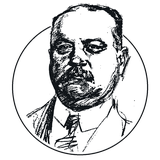
Brackett ran the operation. He had been chief clerk of the Treasury Department under President Benjamin Harrison and had been closely connected with the Chicago World’s Fair. In July 1894, as acting general manager, he put out a pamphlet arguing that Baltimore had more potential visitors within easy reach than Chicago did.

Two weeks after the Eiffel story broke, the Baltimore Sun printed Brackett’s own statement of the exposition’s plan and scope. It called for $5 million in spending, 300 acres of grounds, a Midway with copies of Chicago’s Streets of Cairo and Old Vienna, and this:
Fourteen large buildings, a multitude of small buildings, two electric fountains and an electric clock tower will be erected on the grounds.
So the official plan had an electric clock tower and not a word about Gustave Eiffel’s landmark.
Where those grounds would be was still open. On October 4, 1894, the East Baltimore Business Men’s Association met to discuss holding the fair at Patterson Park, the Sun reported the next day. About 60 acres were available there.
We also couldn’t find the Baltimore Sun reporting the purchase at all. A keyword search of the Sun’s archive from August 1894 through June 1895 turned up no story about the tower coming to Baltimore. That’s odd, because the paper covered the fair’s plans closely.
Some reprinted it, some mocked it
Plenty of papers simply reprinted the report as news. Others had fun with it, and the New York Sun took it apart on September 9, 1894.

The report of the purchase of the Eiffel Tower by Baltimore speculators probably has its foundations where the Tower has its apex. We could build two Eiffel Towers for the money that it would cost to take down, transport, and reërect the Parisian article.
Structural steel was worth less than two cents a pound erected anywhere within 500 miles of Pittsburgh, the New York Sun pointed out. So the Paris tower held no more than a quarter of a million dollars’ worth. And an American tower wouldn’t be a “sky-piercing gallows like that of the Champ de Mars.”
The New-York Tribune took the sale at face value and went after Baltimore instead. On September 13 it said the tower would be “a rather top-heavy decoration for so small a town as Baltimore.” Then it wondered what visitors would see from the top:
When one gets to the top of it there will be nothing to see except the waters of the Chesapeake and the blue encircling hills of Anne Arundel and Carroll counties, a spectacle not without grace and charm, but hardly worth climbing so high to see.
Ouch. The Savannah Morning News also took it as fact and used it to needle Atlanta, which was planning its own fair. Since Baltimore had already landed the Eiffel Tower, the paper said, “Atlanta had better strike for the Ferris wheel quick.”
What Paris said
French newspapers picked up the story from the New York Herald, and they were cool about it. A paper in Bar-sur-Seine noted on September 14, 1894, that any sale could only be conditional. It was possible, the paper said, that the tower wouldn’t be part of the 1900 Exposition, but no plan for that exposition had been adopted yet.
That open question is the closest thing to a fact the rumor ever had. Paris was collecting designs for its 1900 world’s fair, and the tower’s place in it hadn’t been settled. A letter from Paris that turned up in a Nevada weekly in December 1894 laughed off the whole idea:
We have been indulging in a good deal of laughter recently over a rumor, where originating I cannot say, that we are to lose our Eiffel Tower, and that, moreover, it it [sic] going to be taken to Baltimore, there to be re-erected. There is not much likelihood that anything of the kind will occur. We want our Tour Eiffel for our great international exhibition of 1900.
I love this letter. Paris kept its tower, and when the 1900 Exposition opened, the tower stood at the center of it.

Why it never happened
As far as the record shows, it was a rumor that got printed. Every account we found credits the World, and nobody has ever been caught planting it as a hoax.
The fair itself died too, and on March 5, 1896, the Centennial Association gave up. It had spent three years trying to raise a $500,000 guarantee fund (the same figure as the rumored tower price, but a different pot of money). It had pledges of only $300,000 to $400,000, and the $500,000 the city had promised depended on hitting that mark.
The association blamed the “refusal of wealthy citizens and corporations to liberally subscribe,” dull business, and the collapse of the biggest railroad in Maryland. That was almost certainly the Baltimore and Ohio, which had gone into receivership days earlier. The paid staff was let go and the headquarters closed.
Brackett got to Paris after all
Fred Brackett did end up working under the Eiffel Tower. In August 1898, President William McKinley named him secretary of the United States commission to the Paris Exposition of 1900. Brackett was then a Treasury official living in Baltimore.
In February 1900 he sailed for Paris on the steamship St. Paul to take up the job. The man who wouldn’t say whether Baltimore had bought the tower spent the exposition working in its shadow, right where it had been all along.
Lost Baltimore stories, in your inbox.
The newest story, plus a few from the archive.
Free. Unsubscribe anytime.
We use AI to help research, write and edit stories across our sites. Here’s how we use AI.Suggest a correction