
Architecture
Row houses, railway stations, schools and monuments fill this collection of Baltimore building photographs and stories.

Baltimore’s Pratt Street Power Plant supplied electricity to streetcars before its conversion to entertainment and commercial uses. Two photographs show the changing landmark.

Poe’s first headstone was wrecked in a railroad accident. Baltimore’s teachers and students helped raise the monument unveiled in 1875.
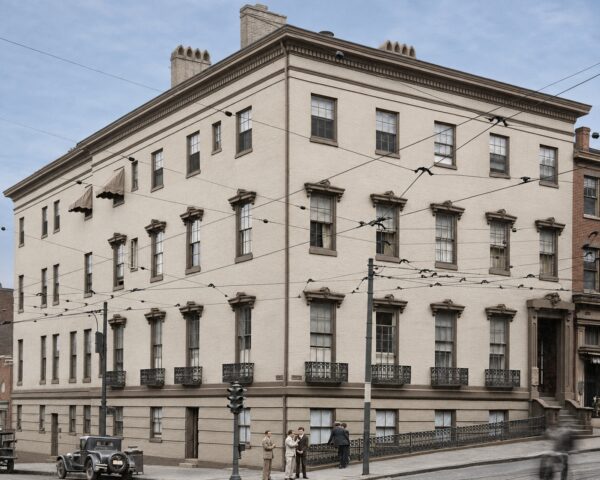
A pickle salesman lived at 529 North Charles in 1900. A 1960 newspaper report places a French consul and tobacco buyer at the same address.

Seven years after the fire, Baltimore’s skyline concealed repaired skyscrapers, an interrupted Custom House and a reshaped waterfront.
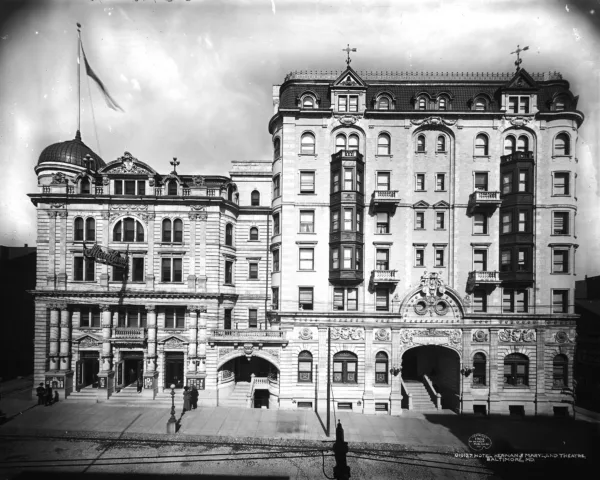
Kernan connected a hotel to two theaters. The basement would later host punk and new wave bands as the Marble Bar.
There’s more where these came from.
Lost Baltimore stories in your inbox most mornings: the newest, plus a few from the archive.
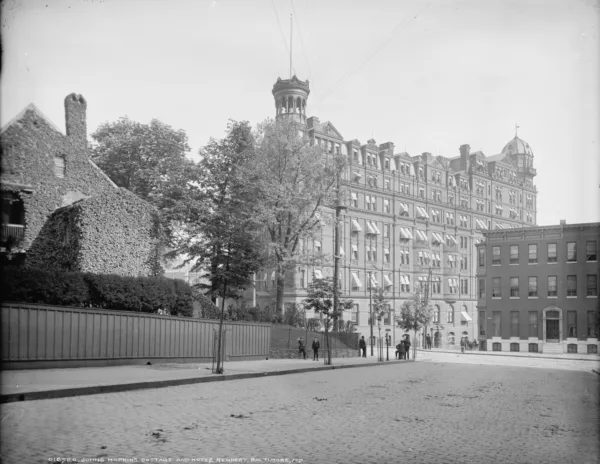
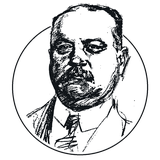
Arthur P. Gorman held court in a room upstairs at Baltimore’s Hotel Rennert, where Maryland’s Democratic bosses met, plotted and cut their deals.
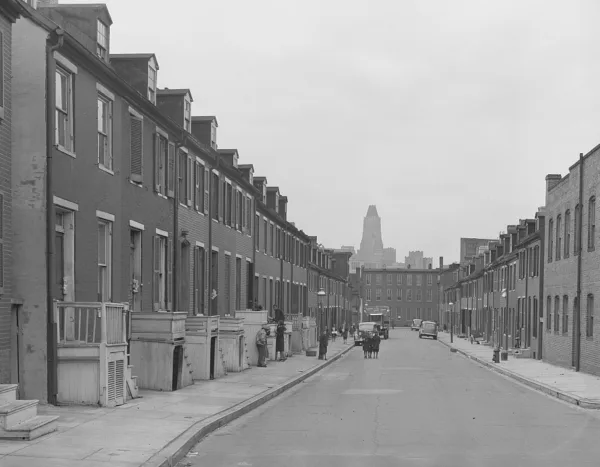
Photographs from April 1939 show row houses in Baltimore.

What the Afro-American reported the week Read’s opened its lunch counters to Black customers in 1955, and why the sit-in’s exact date is still debated.

How the Great Baltimore Fire of 1904 outran Washington’s engines and the city’s dynamite, and how Baltimore rebuilt 140 burned acres with wider streets and new sewers.
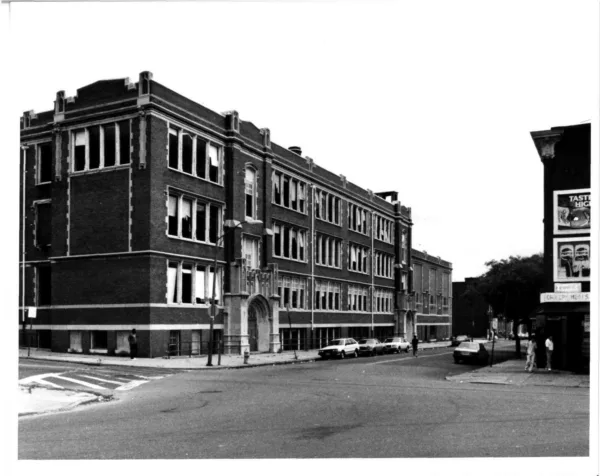
The story of Maryland’s first public high school for Black students, from two added grades in the Peale building on Holliday Street in 1883 to the alumni who made it famous.
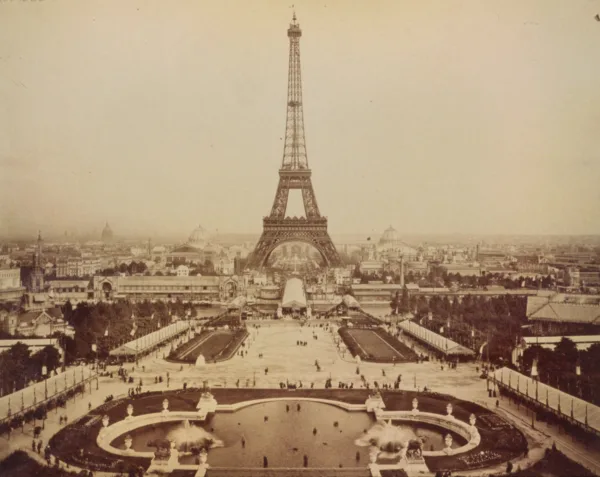
In September 1894, papers from New York to Nevada reported that Baltimore had bought the Eiffel Tower. Nobody had.
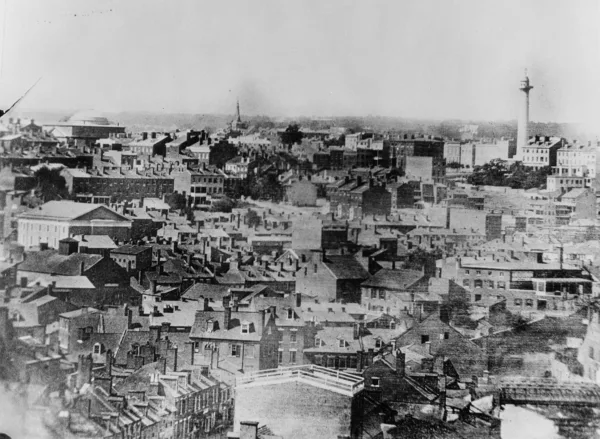
An old panorama places Baltimore’s Washington Monument above a dense patchwork of roofs and chimneys. The column and the churches around it give the view some familiar landmarks.

Explore the design of Johns Hopkins Hospital, from its pavilion wards and ventilation system to early photographs, a drawing and a color postcard.
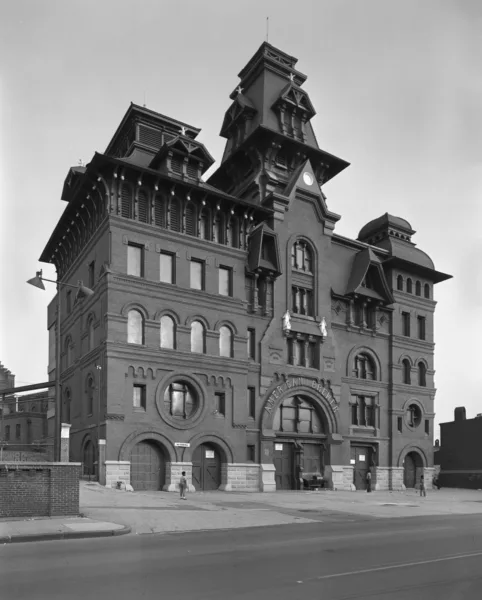
Wiessner’s ornate 1887 brewhouse was the centerpiece of a working brewery on Gay Street. After production ended in 1973, the building found a new purpose with Humanim.
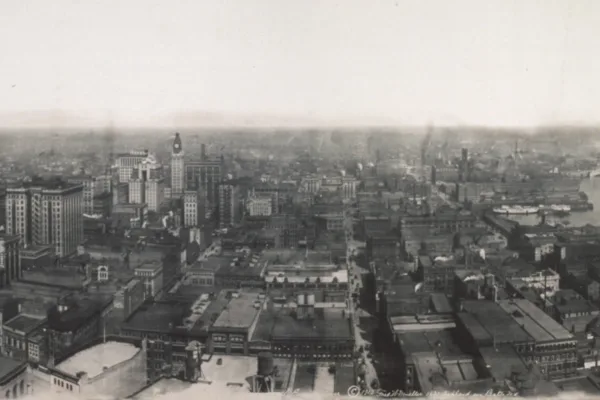
In 1911, Henry B. Gilpin climbed a giant medicine bottle above Baltimore. A later panorama shows the city spread out below.
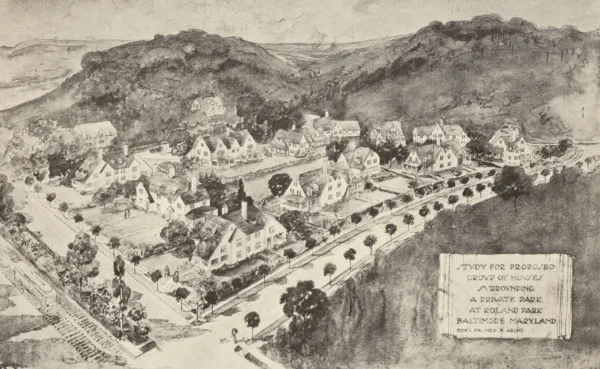
In 1908 the Baltimore Sun called Roland Park the city’s most fashionable suburb. Here’s how a company founded in 1891 with $1 million from English investors turned 550 acres of orchard and meadow into it.
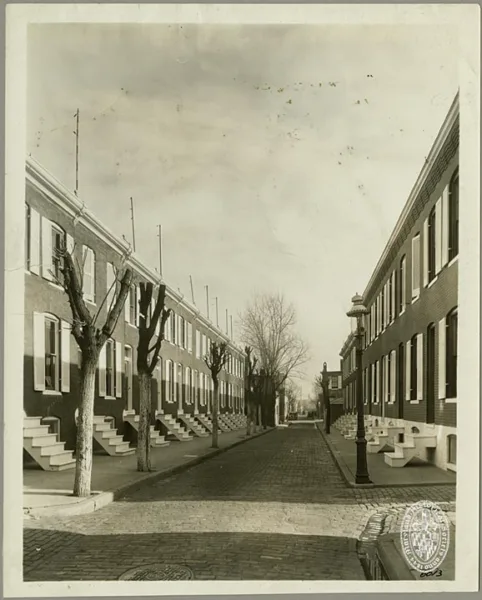
A photograph looks down the 500 block of South Glover Street around 1930.
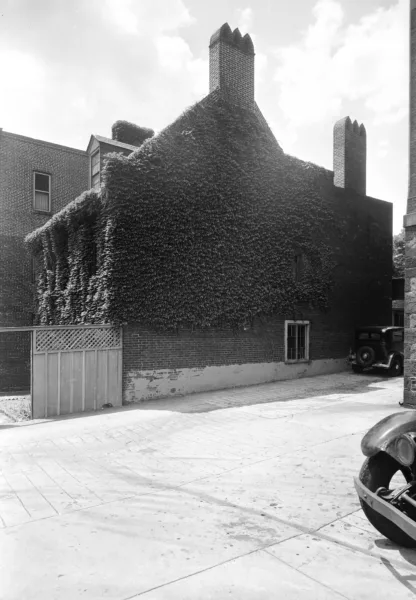
Ivy covers Mother Seton’s House at 600 North Paca Street in this 1936 photograph.

These photographs record commercial buildings in the 1400 block of East Baltimore Street.
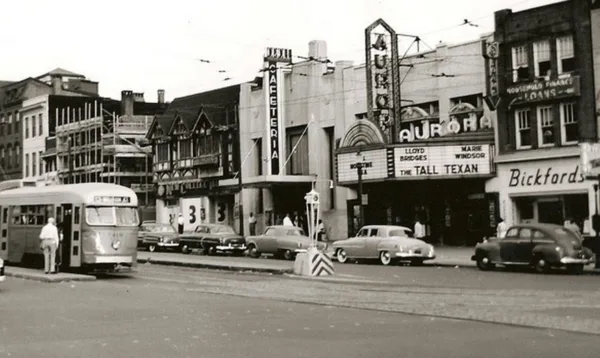
The film on the Aurora Theatre’s marquee and newspaper ads suggest this photograph dates to the summer of 1953.