

Why is baseball exempt from antitrust law? You can blame Baltimore for that one. More exactly, you can blame the Baltimore Terrapins, a Federal League club that sued the National and American Leagues. They won a $240,000 judgment in Washington, saw it wiped out on appeal, and lost for good in the U.S. Supreme Court on May 29, 1922.
Antitrust laws are meant to protect competition and curb monopolies. But Justice Oliver Wendell Holmes wrote the opinion, and he called the business of giving ball games “purely state affairs.”
The Court leaned on that Baltimore case again in 1953, and in 1972 it called baseball’s exemption an established aberration and left any fix to Congress. So how did a ball club from York Road end up at the center of all this?
Baltimore Is Back on the Big League Map
In the fall of 1913 a group of Baltimore citizens was offered a franchise in the Federal League, which the Sun liked to call the “baby” league. According to the club, about 600 Baltimoreans bought stock, and Carroll W. Rasin was the club’s president.
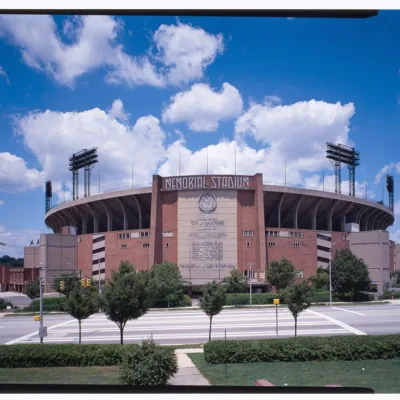
They built Terrapin Park at York Road and 29th Street in North Baltimore, and the club later said it cost nearly $100,000. It opened on April 13, 1914, against Buffalo, with Jack Quinn pitching for Baltimore. The Sun reported that the turnstiles counted 27,692 paid admissions, though it rounded the crowd up to 28,000 in its headline.
The Sun opened its front-page story the next morning with a single line: “Baltimore is back on the big league map!” Back, because the city had been there before with the old Orioles, feted as National League champions in 1894. The paper was sure that this time it was for keeps.
They were arguments set down in black and white: unanswerable arguments that Baltimore is a city of major league size; that Baltimore was back in major league baseball and that Baltimore meant to stick there.
Federal League president James A. Gilmore, “Fighting Jim,” watched it all from a box right behind the catcher. Remember that name, because Gilmore comes back into this story, and not as a friend.

The club told its stockholders that Baltimore’s attendance in 1914 was second only to Chicago’s in the whole league. The 1915 season was another matter, and the directors admitted the team was “hopelessly last in the race.”
Left Out of the Peace Deal
In December 1915 the Federal League made peace with the National and American Leagues, and by the club’s account Baltimore wasn’t even invited to the peace meeting in Cincinnati. The deal broke up the Federal League and every one of its clubs except Baltimore, which refused to sign on. With no league left to play in, the Terrapins stopped operating, as the appeals court later put it.
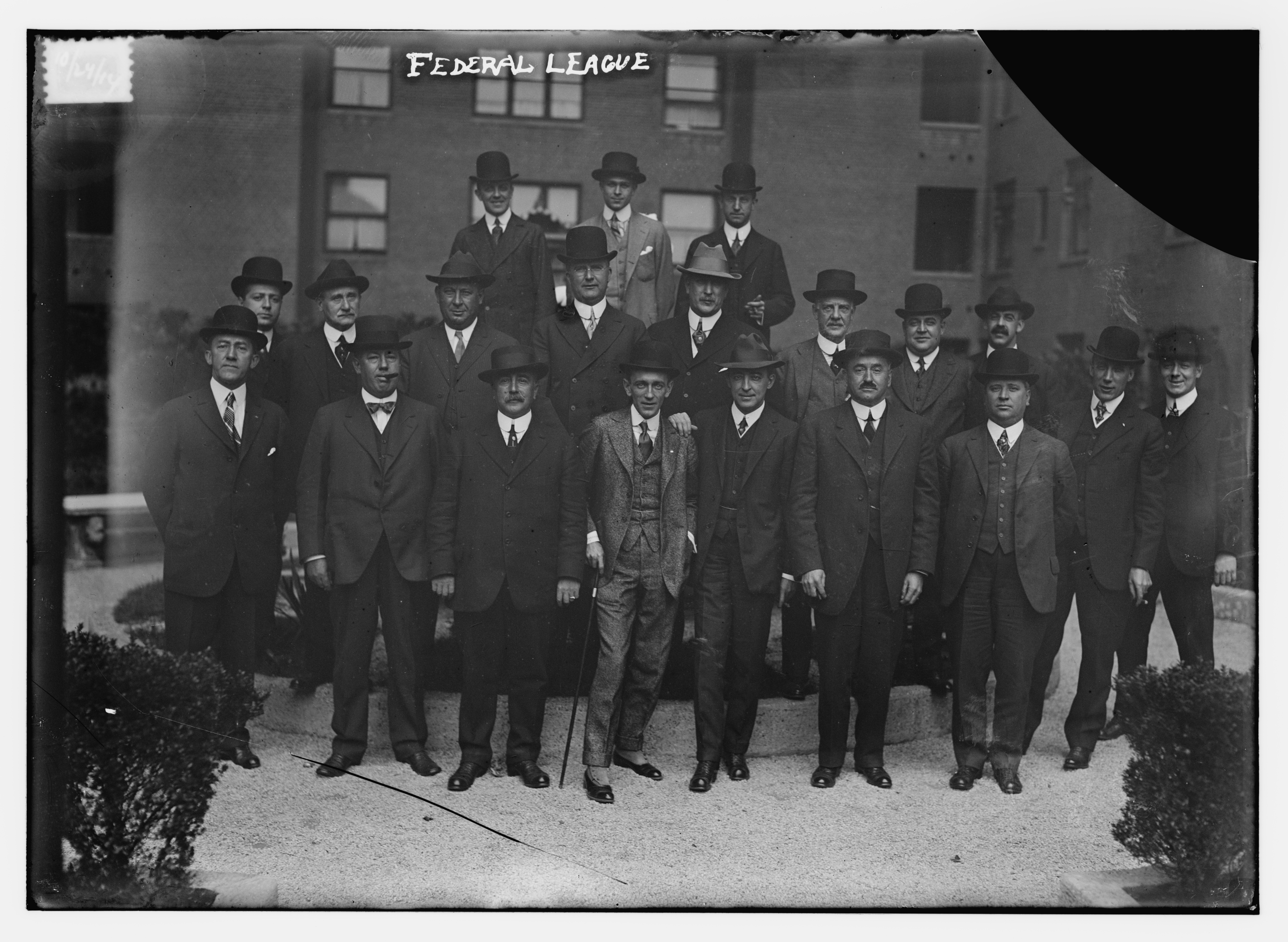
Some of the other owners did very well out of the deal, and the Terrapins said one payment was reported to be as high as $400,000. Baltimore’s offer came by telephone: Gilmore said he thought he could get the club $50,000 in cash if it handed over its grounds. The club said the grounds had cost nearly twice that, and it turned him down.

About the end of December 1915, Gilmore wrote Rasin that the peace agreement was signed. Baltimore’s settlement would be left to a seven-man committee, and Baltimore was supposed to agree in advance to whatever the majority decided. The directors’ reply to their stockholders was dry as toast: “This naive suggestion has, of course, not been accepted.”
By the club’s own count it had about $240,000 sunk into the venture, including two years of operating losses and money paid to players. Hang on to that number.
A $900,000 Lawsuit
According to the Sun, the Terrapins sued in the U.S. District Court at Philadelphia on March 29, 1916, asking $900,000. Their lawyer was William A. Glasgow Jr., whom the paper described as “the famous trust-buster employed by the Baltimoreans.”
The defendants included every National and American League owner and three former Federal Leaguers: Gilmore, Charles E. Weeghman and Harry Sinclair. The National Commission, the three-man body that ran the agreement between the two big leagues, was named too. The Sun blamed the pact that had “shifted this city from the major league map back to the bushes.”

That first suit fizzled. Baltimore’s lawyers read stenographic notes from the December 1915 peace negotiations, which showed the Federal League’s own delegates saying they had authority to act. The Sun reported that this undermined the conspiracy claim behind that suit. On June 15, 1917, the lawyers asked Judge Dickinson of the federal court in Philadelphia to drop the case.
The paper’s headline gave that round to Organized Ball, its name for the established leagues.
But the Terrapins weren’t finished. According to the Sun, on Sept. 20, 1917, they filed a new $900,000 suit in Washington, in the Supreme Court of the District of Columbia.
Despite its name, that was the District’s own trial court, not the U.S. Supreme Court. As the Sun put it, “By filing the suit in Washington the Baltimoreans got closer to home.”
A Washington Jury Sides With the Terrapins
The Washington trial lasted about three weeks. Justice Stafford, the trial judge, ruled that baseball was interstate commerce under the Sherman Act. But the jury still had to decide whether the defendants had conspired to destroy the Federal League, whether they had destroyed it, and whether that had injured Baltimore. The damages were for the jury to decide, too.
Baltimore had asked for $900,000, three times the $300,000 in damages it claimed, because antitrust law provided for triple damages. On April 12, 1919, the jury awarded $80,000, and the court tripled it to a $240,000 judgment.

That’s the same $240,000 the club said it had invested, and the Sun noticed: the award covered the stockholders’ money, but not the value the club placed on its franchise. Its correspondent called the combination something “all the sporting world has known to be an airtight monopoly, but which the courts never before passed upon.”
William L. Marbury, Baltimore’s lead lawyer, was in no mood to be modest.
Baltimore’s right to major league baseball has been vindicated. A ruthless monopoly which has denied her that right and which had the power and money to strangle the Federal League club has now been found guilty of an unlawful conspiracy to keep our community from enjoying the best there is in this sport.
He added that “those who have prostituted this sport must now realize that they will have to reform it from the ground up.” The Sun’s man also picked up some nervousness in the capital, where people worried a Baltimore win might end with Washington losing its own major league club.
Players Sold Like Cattle or Slaves
Organized Ball’s Washington lawyer, C. W. Bell, announced an appeal. In its opinion of Dec. 6, 1920, the Court of Appeals of the District of Columbia threw out the $240,000 judgment, holding that the leagues were not within the Sherman Act. As that court saw it, a ball game can’t be shipped anywhere, since it starts and ends in one place.
Baltimore could have gone back for a new trial. Instead it asked the appeals court to enter judgment for the leagues, so it could take the case straight to the U.S. Supreme Court. In other words, it asked to lose so it could appeal at once, and the court obliged on Jan. 3, 1921.
The case was argued on April 19, 1922. Baltimore’s lawyers told the justices that players “are bartered and sold like cattle or slaves,” and Marbury said Organized Ball controlled all 8,000 professional players in the country. Senator George Wharton Pepper of Pennsylvania, arguing for the leagues, said the draft and the reserve clause, rules governing how clubs obtained and kept players, “stimulated competition rather than stifled it.”
Then Pepper made an example of his opponent. “Mr. Marbury came here from Baltimore as per schedule today to argue this case,” he said, “but he is not a part of interstate commerce.”
Marbury had a comeback ready. He told the Court, “There was once a Governor of Maryland,” a man who “always argued that there is no such thing as a fact.”
As I heard Senator Pepper allege that there is no baseball trust and the players are not controlled like cattle or slaves, I almost agreed that there is no such thing as a fact.
Charles A. Douglas, arguing alongside Marbury, called the old settlement committee a packed one and accused Gilmore of having “sold it out and betrayed the league.”
Holmes: Purely State Affairs
The decision came down on May 29, 1922, and it went against Baltimore. Holmes wrote for the Court, and the judgment for the leagues was affirmed.

Holmes started from Baltimore’s claim that the big leagues had destroyed the Federal League by buying up some clubs and getting all the rest except Baltimore to leave. Then he got to the heart of it.
The business is giving exhibitions of base ball, which are purely state affairs.
Sure, the teams had to cross state lines to play, but Holmes said that was “not enough to change the character of the business.” The travel was “a mere incident, not the essential thing.” The game itself, he wrote, “although made for money would not be called trade or commerce in the commonly accepted use of those words.”
He borrowed two examples from the appeals court’s opinion, too. A law firm sending a lawyer to argue a case in another state wasn’t in interstate commerce, and neither was “the Chautauqua lecture bureau sending out lecturers” to other states. So the reserve contracts and everything else Baltimore complained about “were not an interference with commerce among the States.”
Back home, the Sun ran the news on page 20 of its May 30, 1922, issue, squeezed into one story with two other Baltimore cases the Court decided the same day.
Baseball’s Exemption Lives On
That ruling is where baseball’s exemption comes from. In Toolson v. New York Yankees, decided Nov. 9, 1953, the Court affirmed on the authority of the Baltimore case and held that Congress hadn’t meant to put the business of baseball under the antitrust laws.
In Flood v. Kuhn, decided June 19, 1972, the Court called the exemption an established aberration that Congress had accepted, and said any change was up to Congress.
Congress finally acted with the Curt Flood Act of 1998, signed Oct. 27, 1998. The law applied the antitrust laws to major league baseball’s conduct directly relating to the employment of major league players, and it said it changed nothing else.
So that’s how a ball club from York Road ended up at the center of it all. It was the one Federal League club that refused to go along with the peace deal, and it took the big leagues all the way to the Supreme Court.
Liked this one? Get more tomorrow.
Lost Baltimore stories in your inbox most mornings: the newest, plus a few from the archive.
 Al Capone in Baltimore: His Four Months After Prison, 1939-40
 Babe Ruth’s Baltimore: From Emory Street to Center Field
 Roland Park in 1908: How Baltimore’s Most Fashionable Suburb Was Built
Free. Unsubscribe anytime.
AI helped research and write this story. Here’s how we use AI.Suggest a correction