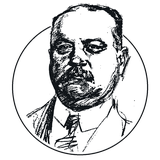


A Baltimore detective once followed a man he knew only as Maxwell into the lobby of a small building in the 200 block of North Liberty Street. When the man asked what he wanted, Lt. Thomas P. O’Donnell said he was a stranger looking for a vacant apartment.
Good thing he kept it casual.
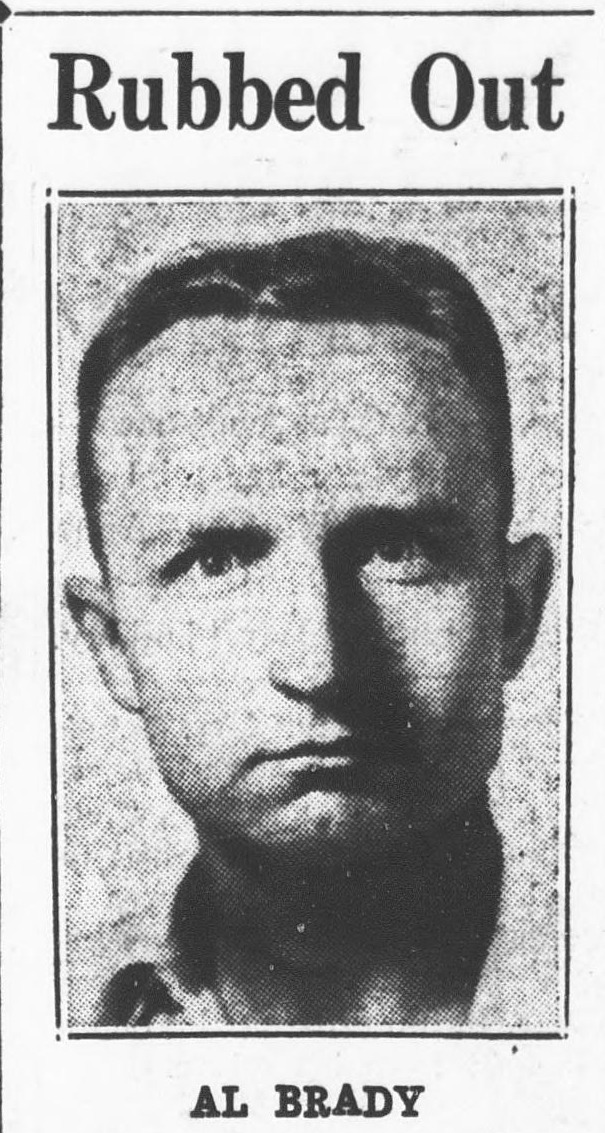
“Maxwell” was Alfred Brady, leader of a gang out of Indiana. On Oct. 12, 1937, the front page of Washington’s Evening Star called him Public Enemy No. 1, under a headline that read “TRIO CAUGHT IN TRAP FOR PUBLIC ENEMY NO. 1”.
The Baltimore Sun later reported that Brady and his two partners, Clarence Lee Shaffer and James Dalhover, had apparently been living in Baltimore since October 1936. They stayed until a running gun battle with a police car on Aug. 7, 1937. They used aliases, two of them married local sisters, and police later found a gunsmith’s shop in a Roberts Place basement.
Public Enemy No. 1 in Govans
According to the Evening Star, Brady had topped the federal agents’ list since the gang broke out of jail in Greenfield, Indiana, on Oct. 11, 1936. The Sun said it was the police search in Indiana that drove them to Baltimore.
In November 1936 Brady rented a room in a lodging house at 540 Beaumont Avenue in Govans, under the name Edward Maxwell. Shaffer and Dalhover ended up with their wives in the 3600 block of Roberts Place. Police later found the gang had also used houses in the 100 block of North Pearl Street and the 400 block of West Lexington Street.
Don’t picture three men gone straight, though. After two of them married at Elkton, the trio made several trips out of town. Investigators said those trips lined up with the times of crimes in Indiana. Indiana officer Paul Minneman, ambushed by bank robbers, died on May 27, 1937, and the Sun said Brady was identified as his killer.
Two brides at Elkton
The Baltimore connection ran through the Raimondo family. Minnie Raimondo married Shaffer, who gave his name as “Mickey Riley,” and her sister Mary married Dalhover, alias Herb Schwarz, in the same ceremony at Elkton. They married in late 1936.
Brady went along to Elkton too, as “Maxwell,” on what the paper called a “double elopement.”
The Raimondos were a Baltimore family. In the 1940 census, Mary and Minnie were living with their mother, Margaret, an Italian-born widow, and their younger brother. Going by those census ages, Mary was about 20 and Minnie about 18 in August 1937.
The sisters said they thought all along the three men were machinists. The men even took that younger brother, Dominic, whom the Sun described as 13, along on fishing trips in their motorboat.
The Sun described a boat with an eight-cylinder automobile engine. Warren Brice, who worked at the boat yard, said the men flashed large rolls of bills and talked about buying a 125-foot cruiser. When asked why, they said they wanted it to “haul bananas.”
A third sister, Josephine, spoke for her sisters once the truth came out. The men “treated us swell,” she said, and were “damned good guys.” The sisters were surprised to learn the trio was wanted for murder and known in Indiana as the “new Dillinger mob.”
Gunfire on Hillen Road
On Saturday, Aug. 7, 1937, Patrolmen Fred Fleischman and Joseph Herget of the Northeastern district were cruising Hillen Road near Woodbourne Avenue in a police car. They spotted a sedan and a gray coupe heading into the woods and figured they were stolen cars about to be stripped.
At Sherwood Avenue and Hillen Road the men in the coupe knocked out a rear window and opened fire. The Sun described what happened to the police car:
The police machine was riddled with bullets, one slug passing through the radiator and crippling the engine. Two other bullets passed through the windshield, between the heads of the two officers.
Between their heads. The Sun reported that a front tire blew out on the gang’s sedan about 200 feet south of Northern Parkway, and its driver jumped into the coupe. The patrolmen commandeered a passing car and kept up the chase.
When the gunmen got out, they fired point blank at the officers, who were out of ammunition by then and ducked behind a truck. The three men escaped in the coupe.
The chase had run through what the Sun called the Loch Raven Boulevard section of the city. The paper first estimated 200 rounds were fired, mostly from a pump gun, and two days later said about one hundred.

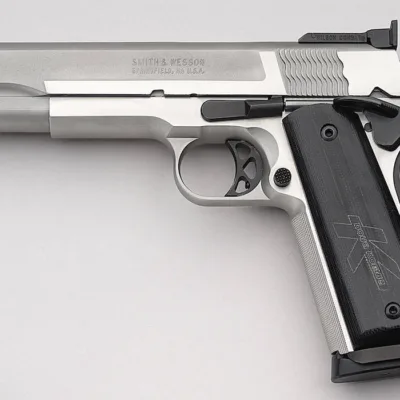
The abandoned sedan was a rolling arsenal. The Sun listed a black leather suitcase holding a 12-gauge shotgun, an automatic pistol and 350 rounds of machine-gun ammunition in belts. A tan suitcase held another automatic and a pearl-handled revolver.
The 1931 sedan was registered in the name of Maxwell, and that led police straight to Beaumont Avenue. The woman who ran the lodging house wouldn’t give her name, but she said, “He lived here today but he left this morning.”
It was the same Maxwell Lt. O’Donnell had followed into that Liberty Street lobby. The paper reported that Baltimore detectives had been keeping an eye on him for some time without knowing who he really was.
A gunsmith’s shop in the basement
Before anyone knew who the gunmen were, a police lookout for three suspects gave Roberts Place as the address of one of them, Herb Schwarz. That was Dalhover’s alias. On the night of Aug. 9, ten officers surrounded the house in the 3600 block and questioned three women and a boy.
What the Raimondo sisters told police revealed that the Brady gang had been in Baltimore, the paper reported.
Police raided three of the gang’s addresses: the sisters’ home on Roberts Place and the houses on North Pearl Street and West Lexington Street. The Sun reported that two suitcases in the basement of the West Lexington Street house held 1,000 rounds of machine-gun ammunition, a submachine-gun stock and a single .50-caliber shell. The paper also listed four tear-gas grenades found across the three raids.
The same basement held the belt and holster of a murdered Indiana officer, with Paul Minneman’s name stenciled on the belt. From Roberts Place came a first-aid kit that Indiana detectives recognized as the kind carried in their state’s patrol cars.
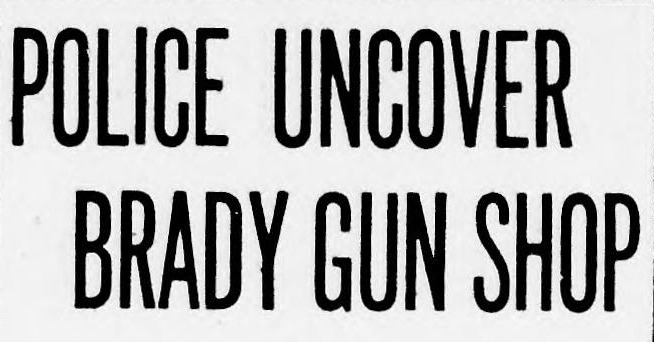
On Aug. 13, the Sun reported that police had found:
a completely equipped gunsmith’s shop in the basement of the Raimondo home in the 3600 block of Roberts Place
In a secret compartment of an automobile the Sun said Brady owned, police found a rifle fitted with a home-made magazine that greatly increased its capacity. There was evidence the gang had been making clips for heavy automatic pistols, too. Capt. John Cooney, the chief of detectives, said the gunmen had carefully removed every label from their clothing, which was of cheap quality anyway.
Payrolls, machine guns and a fast boat
What were they planning here? Police said the gang had closely questioned Anthony Raimondo, the sisters’ brother, about large payrolls in the city. He told police he often met them at Fayette and Paca Streets, and they once asked him to check on a pawnbroker said to carry large sums of money.
Police also said the gang offered Anthony $250 for each machine gun he could steal from the One Hundred and Fourth Medical Regiment Armory. He told police he never even answered.

Some investigators guessed the gang had been out to hold up an express money truck carrying receipts from the Bel Air race track on the day the patrolmen surprised them. Police called that pure conjecture.
The Sun said the boat could make about twenty knots (an earlier story said twenty miles an hour), enough to outrun any boat the Baltimore police owned. Police thought it might have been meant for a getaway, and they towed it to the police dock at the foot of Philpot Street.
The Raimondos in court
Federal agents said their questioning led them to believe the family had no idea who the men really were.
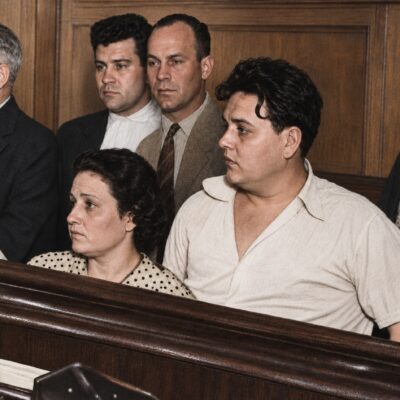
Even so, Anthony and his three sisters were locked up on the night of Aug. 11 and brought before Eastern Police Court on a charge of conspiracy to obstruct justice. Each was held on $5,000 bail while awaiting the grand jury, and Anthony’s explanation was short: “I only done it to protect the family.”
The case went on to Criminal Court. The Sun reported that on Oct. 6, 1937, Judge Eugene O’Dunne found all four “nominally guilty” and freed them. Anthony had to pay $52.10 in court costs. The paper’s headline put it more plainly: technically guilty.
The judge told the defense lawyers that Anthony should have known better than to get mixed up with racketeers. As for the sisters, O’Dunne said, “The girls were merely frightened when they discovered their husbands were gangsters.”
Dead end in Bangor
On Oct. 12, 1937, about two months after the gun battle on Hillen Road, federal agents caught up with the trio in Bangor, Maine. Shaffer died with Brady, Dalhover was captured, and Ghosts of Maine has the whole story of how Public Enemy No. 1 died on a Bangor street.
Baltimore police wanted their turn with Dalhover, too. Capt. Cooney said the city would seek him on charges of attempting to kill Patrolmen Herget and Fleischman on Loch Raven Boulevard.

Back on Roberts Place, the brides took the news quietly. Minnie told the Sun, “I’m not sorry, I’m glad they have been caught. Now I know where they are.”
She said she and her sister were still living on Roberts Place. For the first few nights after their release, they had been afraid the men would come back.
Mary, Dalhover’s wife, said they had it coming to them, and then she softened a little:
“In one way, I guess I’m a little sorry, after all. But it had to happen sooner or later.”
Liked this one? Get more tomorrow.
Lost Baltimore stories in your inbox most mornings: the newest, plus a few from the archive.
 This storyWhen Public Enemy No. 1 Hid Out in Baltimore as Edward Maxwell
 Memorial Stadium: The Story of Baltimore’s Ballpark on 33rd Street
 Before Harborplace: The Light Street Wharves and the Working Basin
Free. Unsubscribe anytime.
AI helped research and write this story and restore and colorize the featured photograph. The original newspaper photograph is retained in the article. Here’s how we use AI.Suggest a correction