
1850s
Maps, census entries and newspaper notices give this decade’s collection its detail. One theater advertisement introduces John Wilkes Booth to a Baltimore audience.
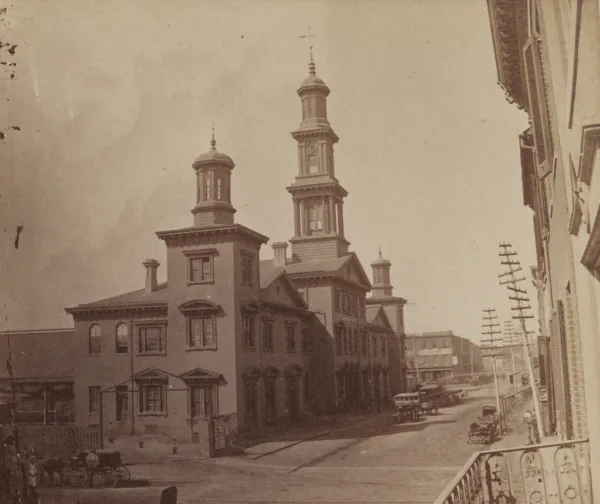
The Camden in Oriole Park at Camden Yards comes from an 1857 B&O depot that saw Lincoln pass through in secret, the Pratt Street Riot of 1861 and the railroad strike riot of 1877.
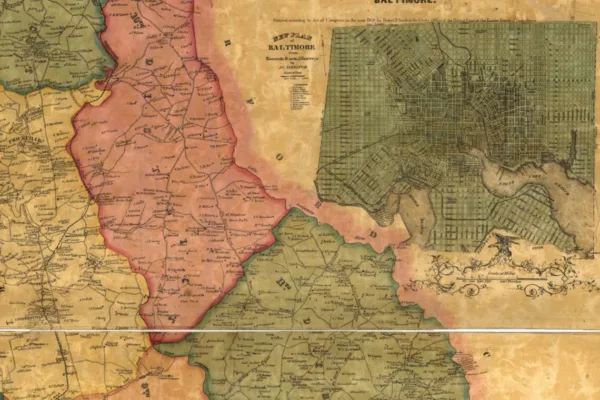
J. C. Sidney’s map places Baltimore’s street grid beside a much larger view of the surrounding county. Its roads, waterways and inset city plan reward a closer look.
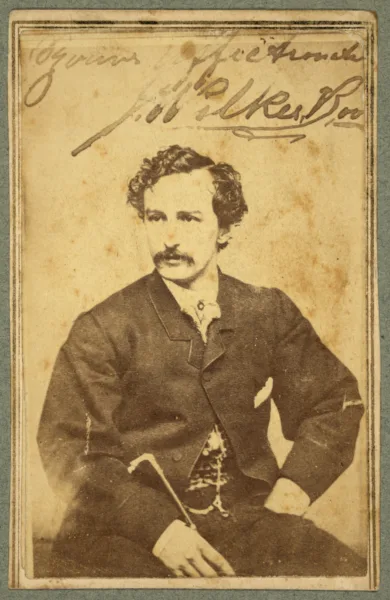
At the Charles Street Theatre, a famous surname helped sell an evening’s entertainment. The advertisement names the role Booth was billed to play.
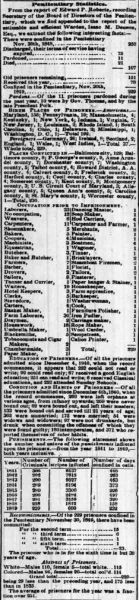
A January 1850 newspaper clipping presents statistics about prisoners in the penitentiary.

The census records John Wilkes Booth’s family in Baltimore, and a drawing shows their former North Exeter Street home.
There’s more where these came from.
Lost Baltimore stories in your inbox most mornings: the newest, plus a few from the archive.

An 1853 map shows a plan for Towson if voters selected it as the Baltimore County seat.
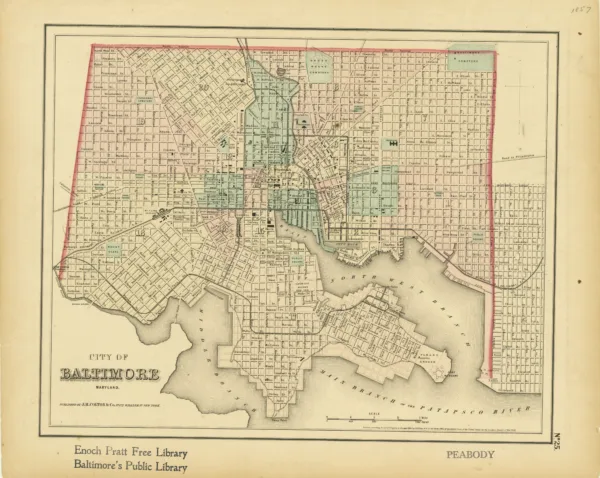
The map carries an 1855 copyright; the post identifies its atlas publication date as approximately 1857.

An E. Sachse & Co. lithograph combines a view from Federal Hill with smaller scenes of Baltimore landmarks.

An October 1853 advertisement promoted Giles’ European Hotel at the then-listed address of 124 Baltimore Street.

A reward notice for Lewis Edwards names the steamer Louisiana and contacts in Portsmouth and Baltimore. The clipping records an attempt to recapture him.
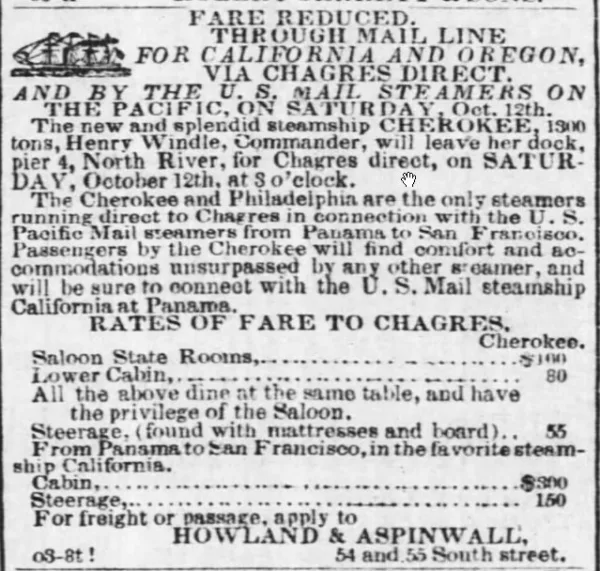
The steamship Cherokee advertised a $100 stateroom or $55 steerage passage to Chagres, on the route toward California.